Coolant colors, and why you cannot mix them
Coolant color is not a reliable compatibility chart. Learn why using the specified coolant matters and what to do when the reservoir is low.
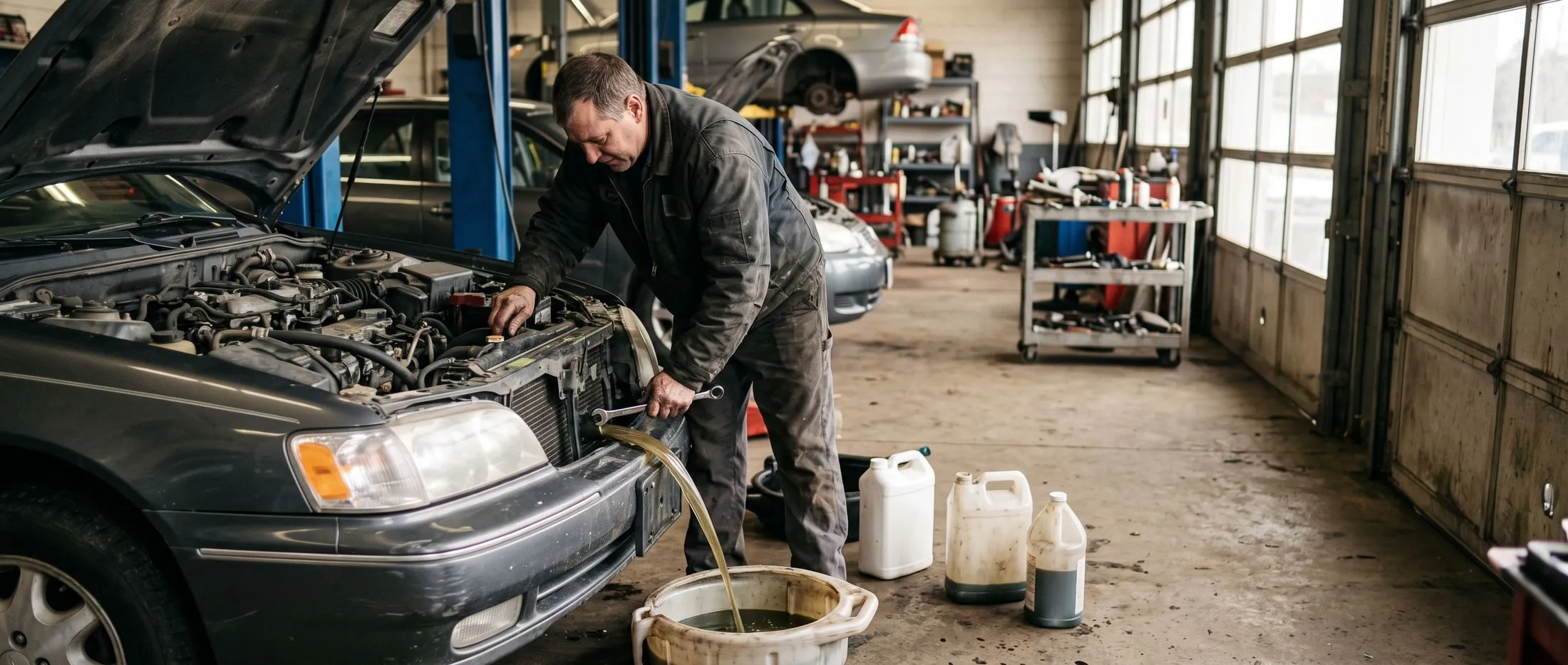
Coolant color is a poor compatibility chart. Manufacturers and fluid companies use dyes for identification, but the corrosion inhibitors and chemistry are what need to match the vehicle specification. Two orange coolants can be different products, and the same approved coolant may appear in more than one color. When a reservoir is low, the temptation to buy “green,” “orange,” or “universal” fluid by sight is understandable; it can still create an unknown mixture and obscure the reason the level dropped.
Find the specification, not a look-alike
Check the owner’s manual, the label near the reservoir, and any service records for the manufacturer-required coolant standard. A manufacturer part number or stated specification is more useful than the fluid’s color. If the manual calls for a premixed product, do not substitute straight concentrate without measuring the water ratio correctly. Likewise, do not assume that a product marked universal has the same approval as the exact service fill. When records are missing, a shop can use vehicle information and the fluid history to recommend an appropriate documented approach.
Look at the level only when the system is cool
Wait until the engine has fully cooled, then compare the reservoir to its cold fill marks. Look around the reservoir, hoses, radiator area, and water-pump region for dried residue, dampness, or a sweet odor. A hot cooling system is pressurized; never remove a radiator or reservoir cap while hot. If the temperature gauge climbs, a temperature warning appears, steam is visible, or coolant is actively leaking, stop driving and arrange help. Adding fluid to an overheated vehicle can be dangerous and does not correct the source of the heat or loss.
Low coolant is evidence of a problem
Modern cooling systems are closed systems. Repeatedly needing top-offs may point to an external leak, reservoir crack, hose connection, radiator, water pump, or an internal concern. The rate of loss and any overheating, heater performance change, or visible residue are useful diagnostic details. Adding random fluid can change the mixture’s protection properties and makes later testing less clear. In an emergency, follow the vehicle manufacturer’s instructions; afterwards, document exactly what was added, how much, and when.
Unknown mixtures need a measured response
Cloudy fluid, oil-like contamination, rust-colored debris, or a known incorrect top-off should be described before service begins. A technician can inspect the system, test coolant condition where appropriate, find leaks, and decide whether correction or a specified fluid service is needed. Lloyd’s helps Sandston, Highland Springs, Varina, Henrico, and Richmond drivers address cooling-system symptoms and fluid questions. The reliable answer comes from the vehicle’s requirement and the system’s condition, never the dye alone.
Water quality and concentration matter too
Coolant concentrate is not simply stronger when more is added. The manufacturer specifies a ratio that balances freeze protection, boil protection, corrosion control, and heat transfer. Using tap water can add minerals that contribute to deposits, so instructions may call for distilled water when mixing is permitted. A coolant tester can help evaluate concentration, but it does not identify every compatibility problem. Keep pets away from spills: antifreeze can be dangerous if ingested, and any spill should be cleaned according to local disposal guidance rather than washed into a storm drain.
Record what is already in the system
If you need roadside assistance or a top-off, save the bottle label or take a photograph before it is discarded. The service date, product name, and amount added help a shop decide how to proceed. This is especially helpful after buying a used vehicle with incomplete records. Good history may prevent unnecessary service, while uncertain history can justify a more careful inspection before incompatible products circulate together.
Accurate records also make it easier to explain whether a change in level happened before or after a service visit.
Do not confuse coolant with other under-hood fluids
Washer fluid, brake fluid, power-steering fluid, and coolant reservoirs can be near one another, and their cap markings differ by vehicle. Only open the container identified in the manual and never pour a fluid into an unlabeled opening. If the reservoir is empty or the liquid’s identity is uncertain, stop before adding anything. A correct diagnosis starts with knowing which system is low, not with filling the nearest plastic tank.
Watch the cabin heat for supporting clues
Weak cabin heat, a sweet smell through the vents, or a windshield that fogs unusually can be useful details alongside low coolant. They do not prove a heater-core leak, but they help establish where to inspect. Tell the service advisor whether the temperature gauge has moved, whether the symptom changes with engine speed, and whether a puddle appears after parking. Cooling-system issues are easier to trace when those observations accompany the fluid history.