What check engine codes actually mean
A code points to a system that needs testing; it is not a repair instruction. Learn how to use a scan result without guessing at parts.
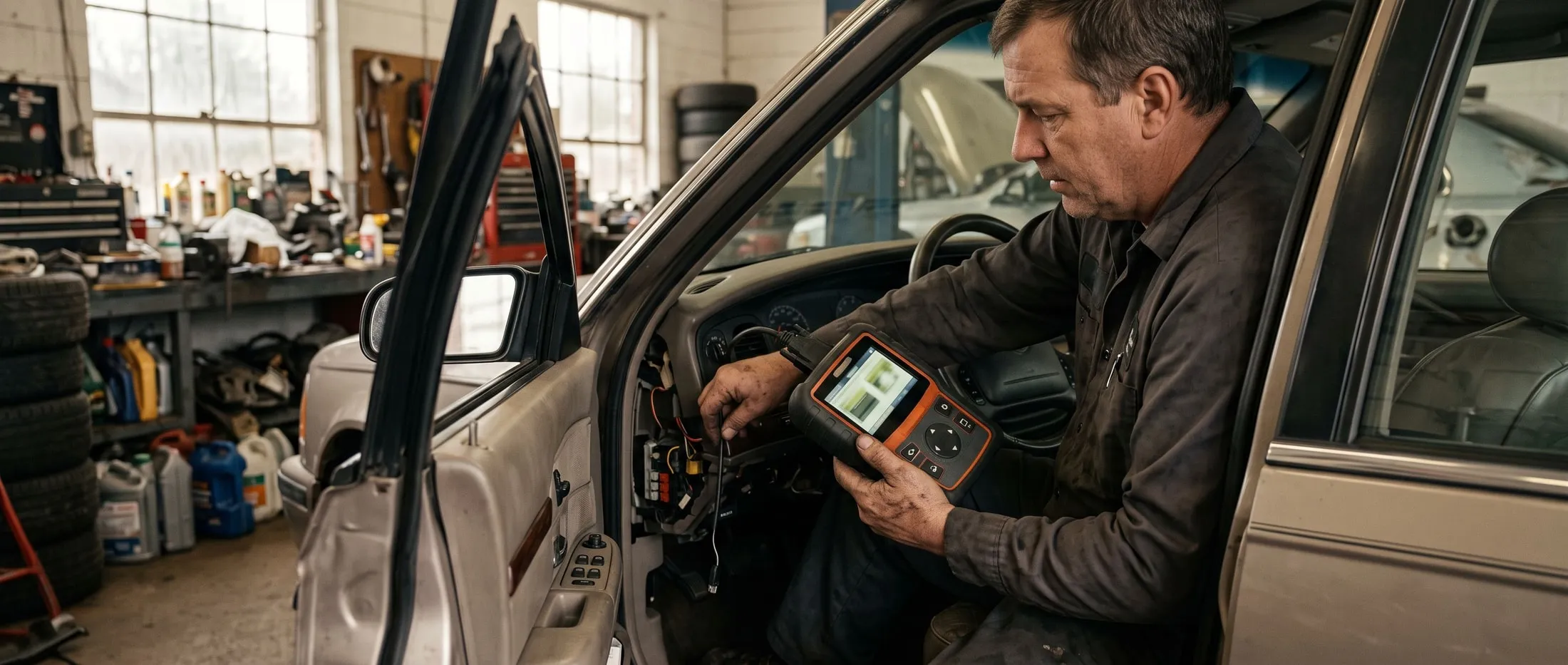
A check-engine code is a diagnostic clue, not a shopping list. The vehicle’s computer has noticed a reading or system behavior outside the expected range and has stored a code to identify the circuit or performance test involved. A code that mentions an oxygen sensor, for example, can be caused by the sensor itself, damaged wiring, an exhaust leak, an intake-air leak, or a fuel-control issue. Replacing the part named in a phone app may erase money without fixing the condition.
Save the whole scan, not just its label
Write down the exact code, including letters and numbers, and whether it is pending, stored, or confirmed. Freeze-frame data can show engine temperature, load, speed, fuel trim, and other conditions when the computer set the code. Note what the driver felt: hard starting, hesitation, rough idle, fuel smell, reduced power, or no symptom at all. Also record when the light appeared and whether fuel was purchased or service was completed shortly before it. That context gives a diagnostic process a starting point that a generic “O2 sensor code” description cannot.
Treat a flashing light as a stop signal
A flashing check-engine lamp may indicate an active misfire that can overheat the catalytic converter. Stop safely and arrange help if flashing is accompanied by shaking, loss of power, smoke, overheating, or a strong fuel smell. A steady light without those symptoms is often less urgent, but it should still be diagnosed soon. Continuing to drive for weeks can allow a small emissions or engine-management problem to become poor fuel economy, hard starting, or damage to another component.
Testing separates cause from effect
Professional diagnosis starts by confirming the complaint and checking relevant data, not by assuming that every stored code is current. A technician may inspect wiring and connectors, look for vacuum or exhaust leaks, compare live sensor signals, check fuel-trim behavior, and perform circuit or component tests. Codes can also be secondary: an engine misfire or air leak can make a downstream sensor report an abnormal result even though the sensor is doing its job. Clearing codes before recording them removes information and can postpone the exact moment when the fault becomes repeatable.
Ask what evidence supports the repair
The helpful question is “what test confirmed this?” Ask which code is primary, which measurements led to the recommendation, and whether other likely causes were ruled out. Request that the invoice preserve the code and diagnosis, especially for an intermittent warning. Lloyd’s provides check-engine diagnostics for Sandston, Highland Springs, Varina, Henrico, and Richmond drivers. Keeping the data and a symptom timeline turns a returning light into a comparison point rather than a new mystery.
Fuel-cap reminders have limits
An EVAP-related code can sometimes be related to a loose or damaged fuel cap, so checking that it is the correct cap and properly seated is reasonable after refueling. It is not a catch-all cure for every check-engine light. Do not keep clearing a returning code or disconnect the battery to hide it before an inspection; readiness monitors may need time to run again and the original information can be lost. If the vehicle has trouble filling with fuel, smells of vapor, or repeatedly returns the same EVAP code, report those details with the scan result.
Keep emissions testing in perspective
In Virginia, a check-engine lamp and incomplete readiness monitors can affect emissions inspection for applicable vehicles. That is another reason not to erase codes immediately before the appointment. The first priority is the mechanical condition and safe operation of the car, not merely getting the light off. A documented diagnosis and completed repair give the monitors an opportunity to run naturally and provide a clearer result.
Know the code families without self-diagnosing
The first letter narrows the system involved: P generally identifies powertrain information, B body systems, C chassis systems, and U network communication. The numbers that follow add specificity, but they still do not name a failed part. A P0300, for instance, indicates random or multiple-cylinder misfire detection; it does not prove that spark plugs are the cause. An honest scan report can guide the appointment, while testing determines whether ignition, air, fuel, mechanical condition, or wiring produced the code.
Preserve evidence after an intermittent warning
If the light disappears, the computer may retain history that can still help. Avoid clearing it simply because the vehicle feels normal that day. Bring screenshots from a consumer scanner, recent fuel or repair receipts, and a description of any stall, hesitation, or odor. Intermittent faults often require recreating the temperature, speed, or load that set the code, so a detailed timeline can prevent a second appointment based on a blank dashboard.