Will a cracked windshield fail your Virginia inspection?
Virginia's windshield rules are more specific than most people expect. Where the crack is matters more than how long it is — here's the actual standard.
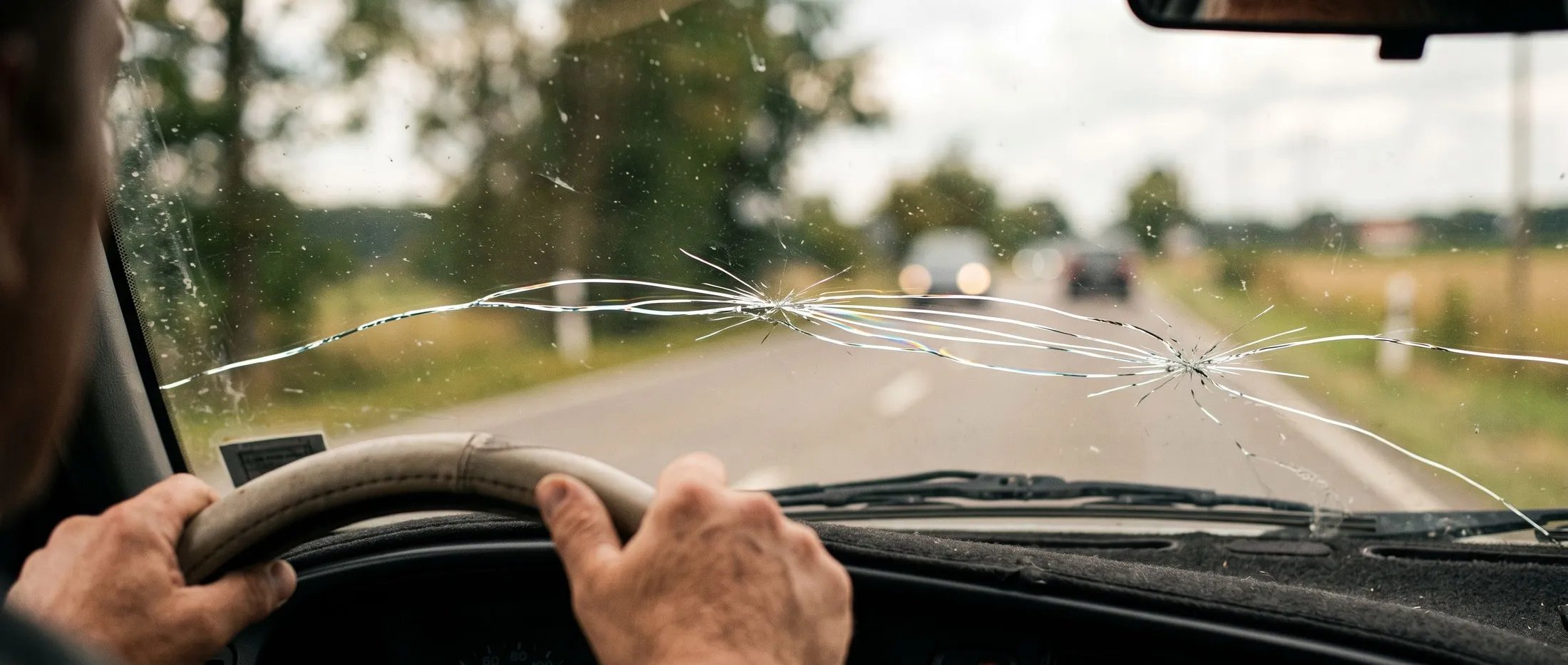
“It’s just a small crack” is one of the more common things we hear the week before somebody’s sticker expires, and the honest answer is that it depends on where it is, not just how big it is.
The standard is about location first
Virginia’s inspection standard divides the windshield by a line three inches up from the bottom — and “the bottom” has a specific meaning: the point where the top of the dash meets the glass, not the bottom edge of the trim. Damage below that line is treated differently from damage above it, because damage low on the glass sits outside the critical field of view.
Above that three-inch line, the rules tighten considerably, and there are two separate ways to fail.
The first is size. A single pit, chip or star crack larger than an inch and a half across is a rejection on its own, anywhere above the line. It does not need to have spread. An inch and a half is roughly a golf ball — smaller than most people picture when they hear “it’s just a chip.”
The second is spread. Rejection also follows where there is more than one crack running from the same point, if at least one of them is longer than an inch and a half. A star with several legs running above the line fails on this even if no single leg looks dramatic.
And separately from any of that: any crack that weakens the glass enough that one piece can move relative to another is a rejection regardless of where it sits. That’s a structural test, not a cosmetic one — a modern windshield is a bonded structural member that helps the roof stay up in a rollover and gives the passenger airbag something to deploy against.
Why the “field of view” idea matters
People reason about this cosmetically: does it bother me when I’m driving? That isn’t the test. The test is whether the damage sits in a region where it can obscure, refract or distract — and whether the glass still does its structural job.
That’s why a long crack low across the bottom can pass while a small star higher up does not.
Chips spread, and Virginia weather is why
A chip becomes a crack because glass expands and contracts. A cold windshield hit with hot defroster air, or a hot one hit with cold rain, puts stress right through the damaged point. Add a Williamsburg Road pothole and the crack runs.
A repairable chip stops being repairable once it runs. That’s the practical argument for fixing it in the week it happens rather than the month before your inspection: a resin repair is cheap and fast; a replacement is neither, and on any car with a camera behind the mirror, replacement also means recalibrating the driver-assist system, which is its own line item.
What we do
We tell you before we start.
If you come in for an inspection and there’s damage on the glass, we’ll look at it and tell you honestly whether we think it passes, so you can decide what to do rather than pay for an inspection that’s going to end in a rejection sticker. If it’s borderline, we’ll say it’s borderline.
If it fails, you get the rejection sticker’s fifteen days to get it sorted, and you are free to have the glass done anywhere you like.
The short version
- The three-inch line is measured from where the dash meets the glass, not the trim
- Below that line: more latitude
- Above it: a single chip or star over 1½ inches across is a rejection by itself
- Above it: more than one crack from the same point, with one over 1½ inches, is also a rejection
- Anything that weakens the glass structurally is a rejection anywhere
- Chips are cheap; cracks are not; the gap between them is a few weeks of Virginia weather
Sticker due? Drop it off for an inspection — $20, the state-set price — or call (804) 737-2828 and ask us to look at the glass first.
If you need this done